MODULE 4.
Masts & Rigging
Aim:
On completion of this module you will have an understanding of the ship’s;
- spars
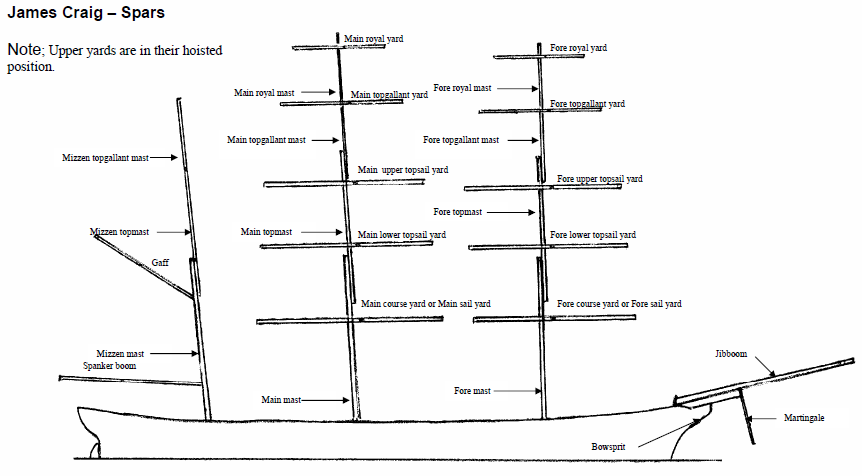
- masts and yards
- standing rigging.
- running rigging for spars and sails.
- parts of typical square and fore and aft sails.
Overview:
Deck trainees are expected to work towards a sound awareness of spars, rigging & lines.
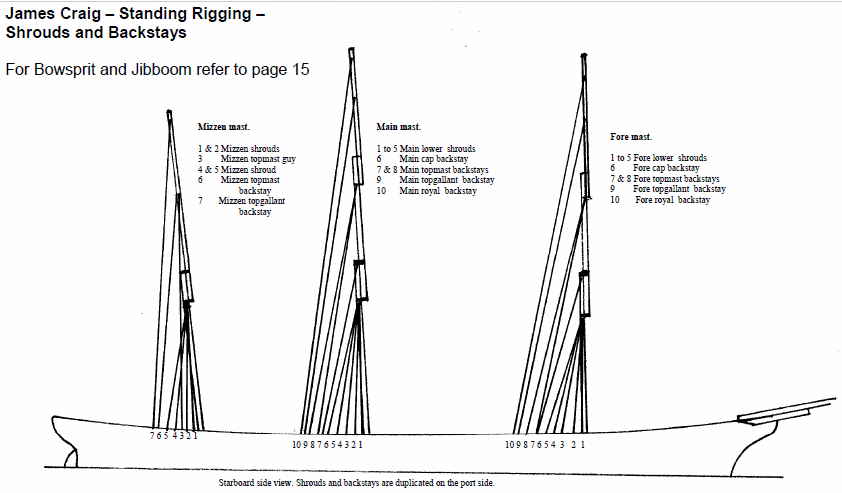
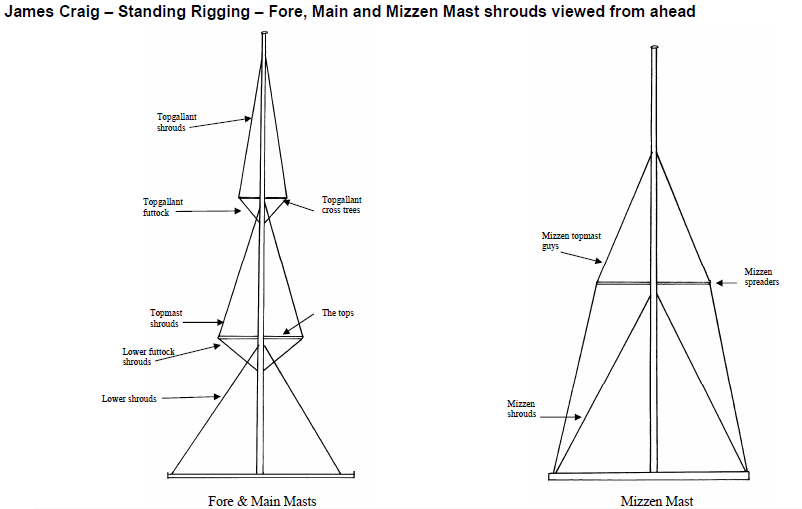
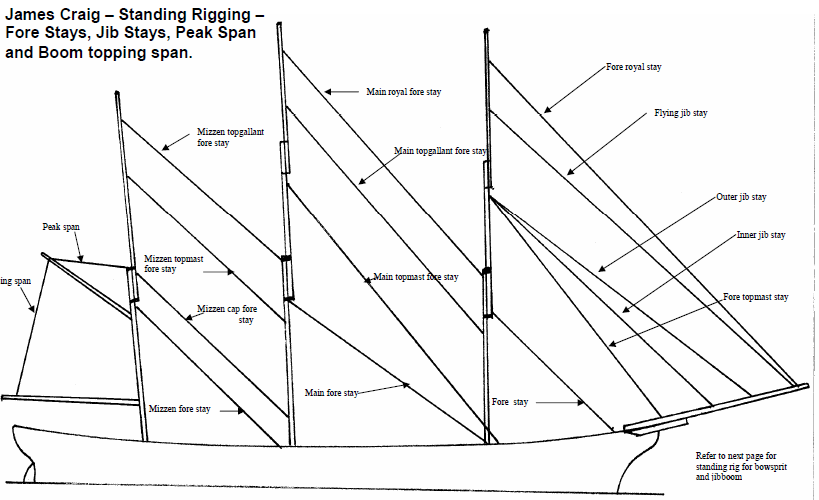
On pages 8 to 13 diagrams show spars, standing rig and sails.
Annexure C contains blank diagrams that can be used to aid in memorising the names of Masts, Rigging and Sails.
Qualified crew (Deckhands, Efficient Deckhands) need to be able to name:-
- ship’s spars
- parts of the standing rigging
- ship’s sails
- sail parts
- the lines that control the sails & spars (running rigging) and
where they are located pin rails.( Refer Module 5 – pages 22 to 24).
Although the above may seem formidable, a structured and systematic approach to learning will facilitate the process.
This will involve:-
- identify spars
- identifying the rigging as standing, running and other (flag
halyards, gantlines), on fore, main and mizzen masts and jibboom.
- observing the principles and patterns that govern where lines fall utilising ‘tools’ such as these notes, rigging and pin diagrams.
Assessment:
Oral examination by a Watchleader who will, when satisfied, sign off task in crew members ‘Diary of Service and Experience Log’ book.
Outcome:
Be able to identify and name the parts of the ship’s rig and able to locate a required line or pin without hesitation.
Spars
Spars – This is a general term for all wood and metal supports used in rigging of a ship, it embraces all masts, yards, booms, gaffs etc.
Spars have standing rigging to keep them in place and support them. Running rigging, on some, is used to control their position relative to the ship and weather.
NOTE: Square rig ships were designed to work down wind, so you will note that the majority of standing rigging and some running rigging is set to support the masts etc from forward movement. The relatively few and lighter fore stays act in the opposite direction. Therefore it is of the utmost importance that the ship is not caught aback, i.e. head to wind.
Spars (Page 9) 9 |
Standing Rigging (Pages 10 to 12) | Running Rigging (Page 5) |
| Masts | Athwart ship; Shrouds Guys Fore support; Fore stays Jib stays Aft support; Backstays |
Nil |
| Yards | Lifts (Page 3) | Braces (Page 4) Halyards (Hoisting yards only) Downhauls (Upper topsail yard only) |
| Booms | Topping lift | Preventers (Page 5) Note- Spanker is loose footed therefore spanker sheet is attached to the end of the boom not the sail, |
| Gaff | Span | Vangs (Page 5) |
| Bow sprit | Bob stay Bow sprit guys |
|
| Jibboom | Martingale stays Jib stays Guys |
|
| Davits/ other | Guys Falls |
The following diagrams show;
- Spars and the names they receive when they are in position.
- Standing rigging – shrouds and backstays to provide thwart ship and
forward
and aft stability for the masts..
- Standing rigging viewed from ahead
- Standing rigging – fore stays to prevent aft movement of the masts.
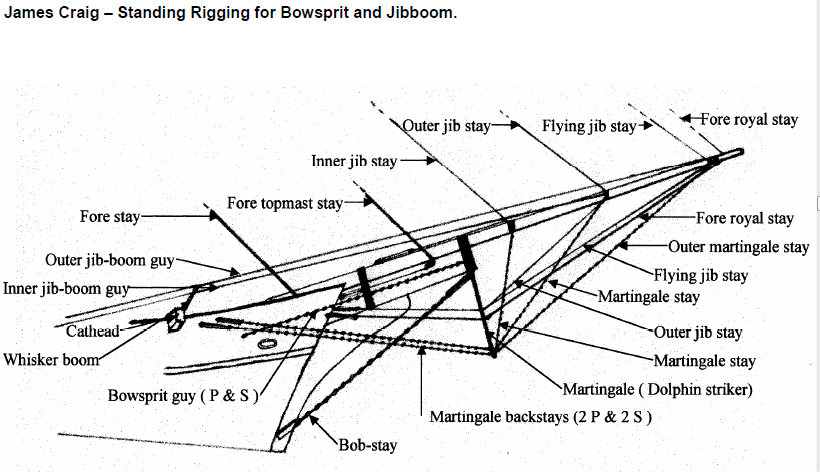
- Standing rigging for the bowsprit and jiboom.
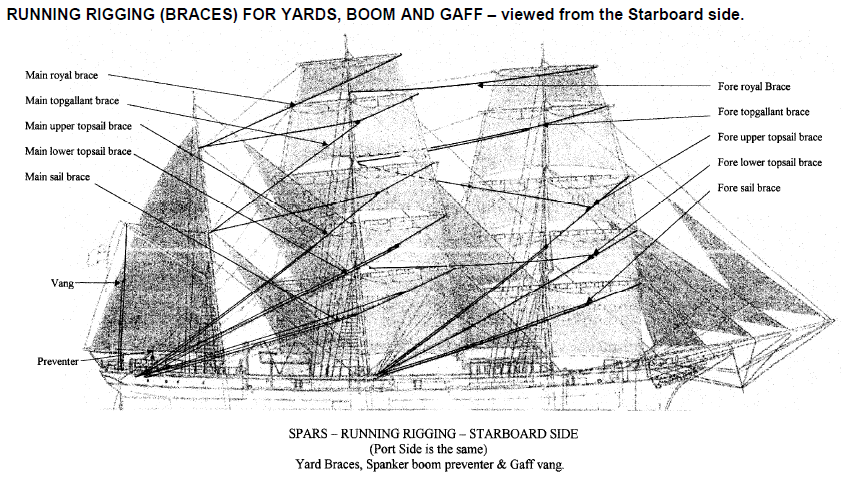
- Running rigging for yards, boom and gaff
- Hoisting yards.
- Trimming yards.
Yards – Braces
The angle of the yards to the ship is controlled by the braces (running rigging) attached to the end of each yard. Refer to the diagram on the previous page.
To locate the pins to which the running end of the braces are attached on deck, refer to the pin diagrams in Module 5, pages 10,11 and 12.
Yard – Halyards
Arrangement of yards on both masts.
NOTE. Lower two yards are fixed to the mast, upper three yards are “hoisting yards”.
Acknowledgement – Masting & Rigging – Harold A. Underhill.
The upper topsail, topgallant and royal yards are supported, when lowered, by their lifts (standing rigging).
Each yard is hoisted by a halyard (running rigging). The yard is attached to the mast by a parral that slides on the mast.
Sails
To set or take in sails some lines are eased while others are hauled. The following tables illustrate these, in general terms. Sail Handling Module 7 will cover sail handling in more detail.
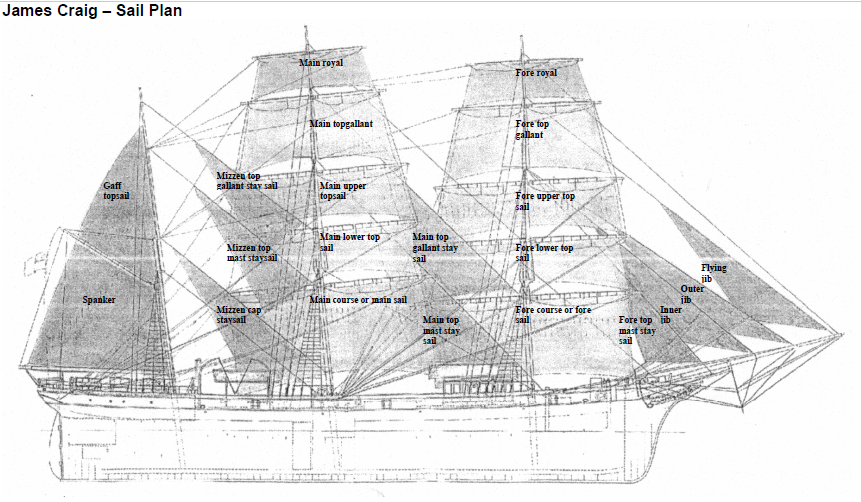
Refer to page 13 for the sail plan.
Square sails running rigging
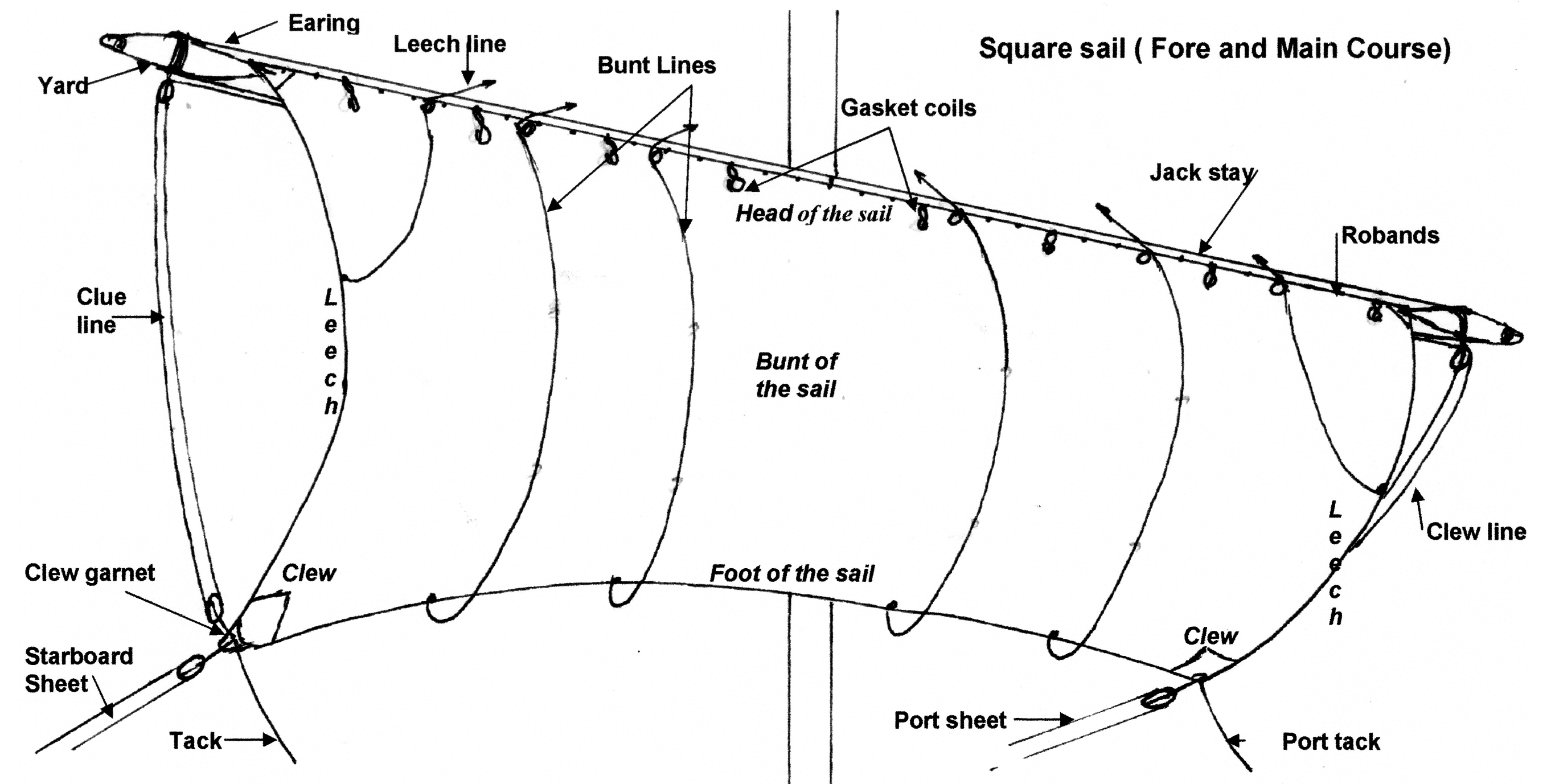
The head of a sail is lashed with robands to the jackstay on the yard.
| To Set, haul on; | To take in, haul on; |
| Tack | Clew lines |
| Sheets | Leech lines |
| Yard halyards | Bunts |
| Clew garnet | |
| Yard halyards (eased) | |
| Yard downhauls |
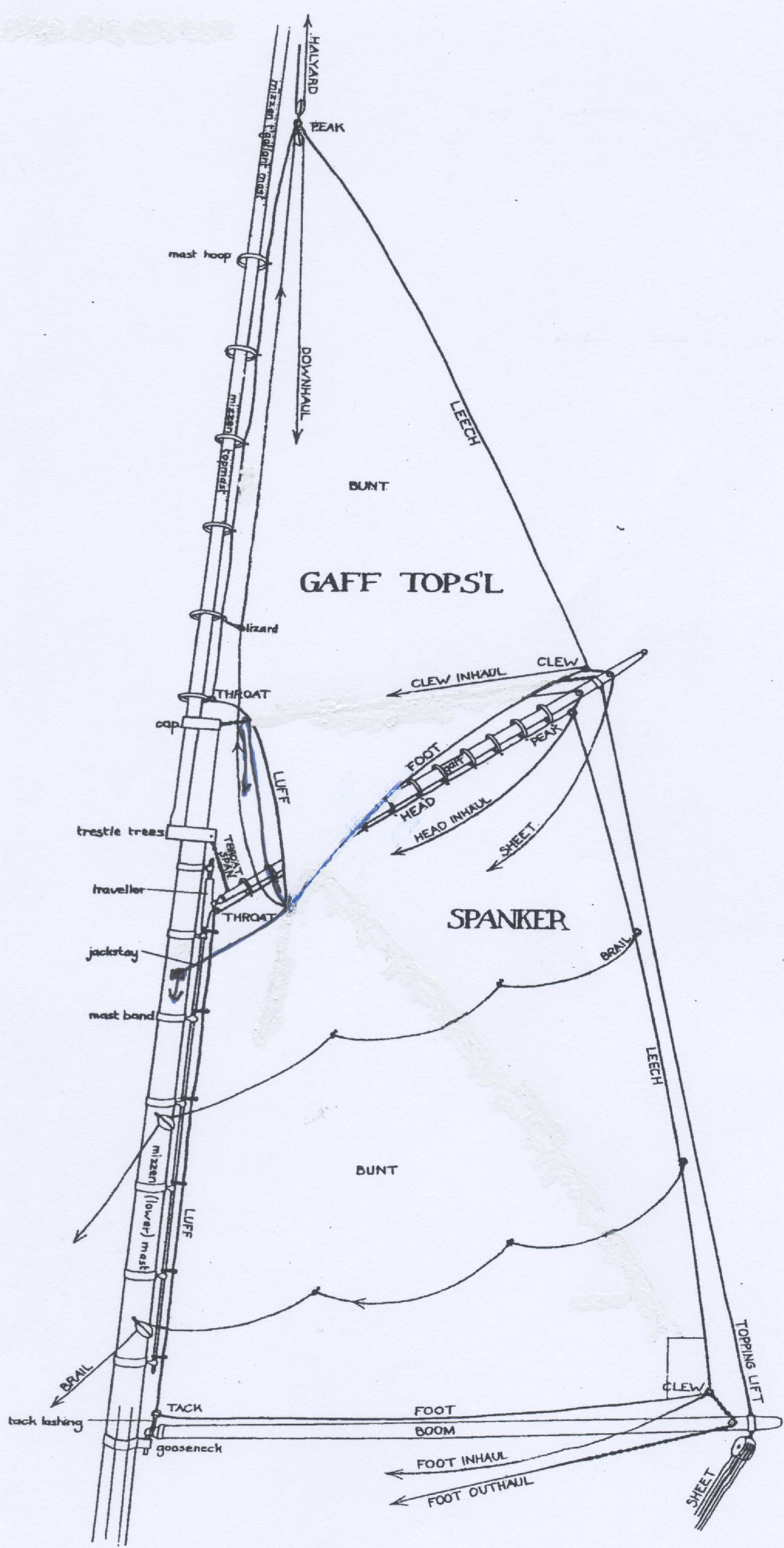
Fore and aft sails running rigging
Sails are made fast at the tack, the luff lashed to hanks, hoops or a jackstay, the clew is controlled by the sheets or outhaul, the head by a halyard or outhaul and downhaul or inhaul.
| To set, use; | To take in, use; |
| Halyards | Downhauls |
| Sheets | Clew line |
| Outhauls | Inhaul |
| Brails |
Other running rigging & lines
Some examples;
Painter Man rope Freeing line
Painter pendant Gantline Heaving line
Bowsing line Flag/ signal halyard Etc.
Parts Of Typical Sails And Handling Lines
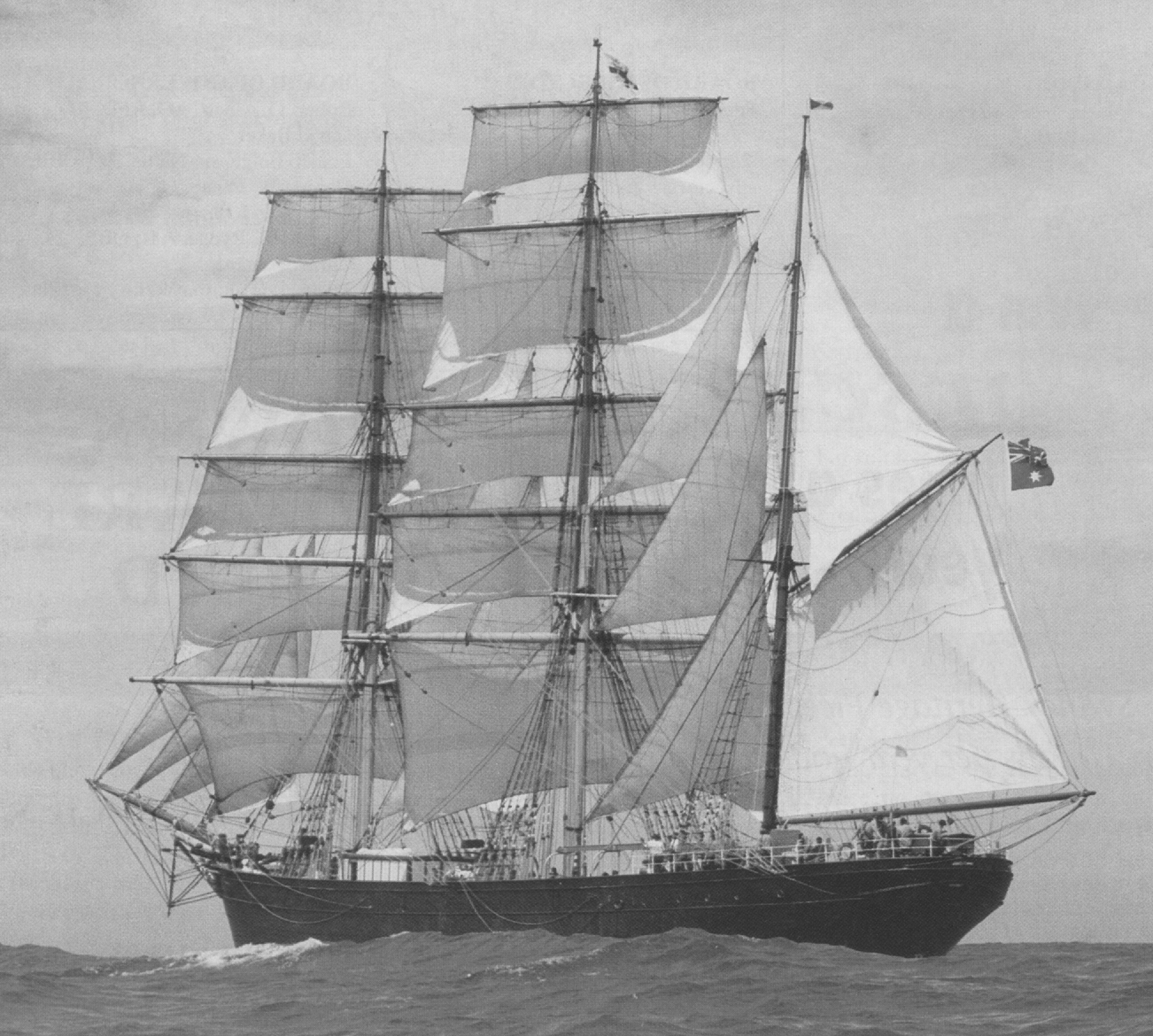
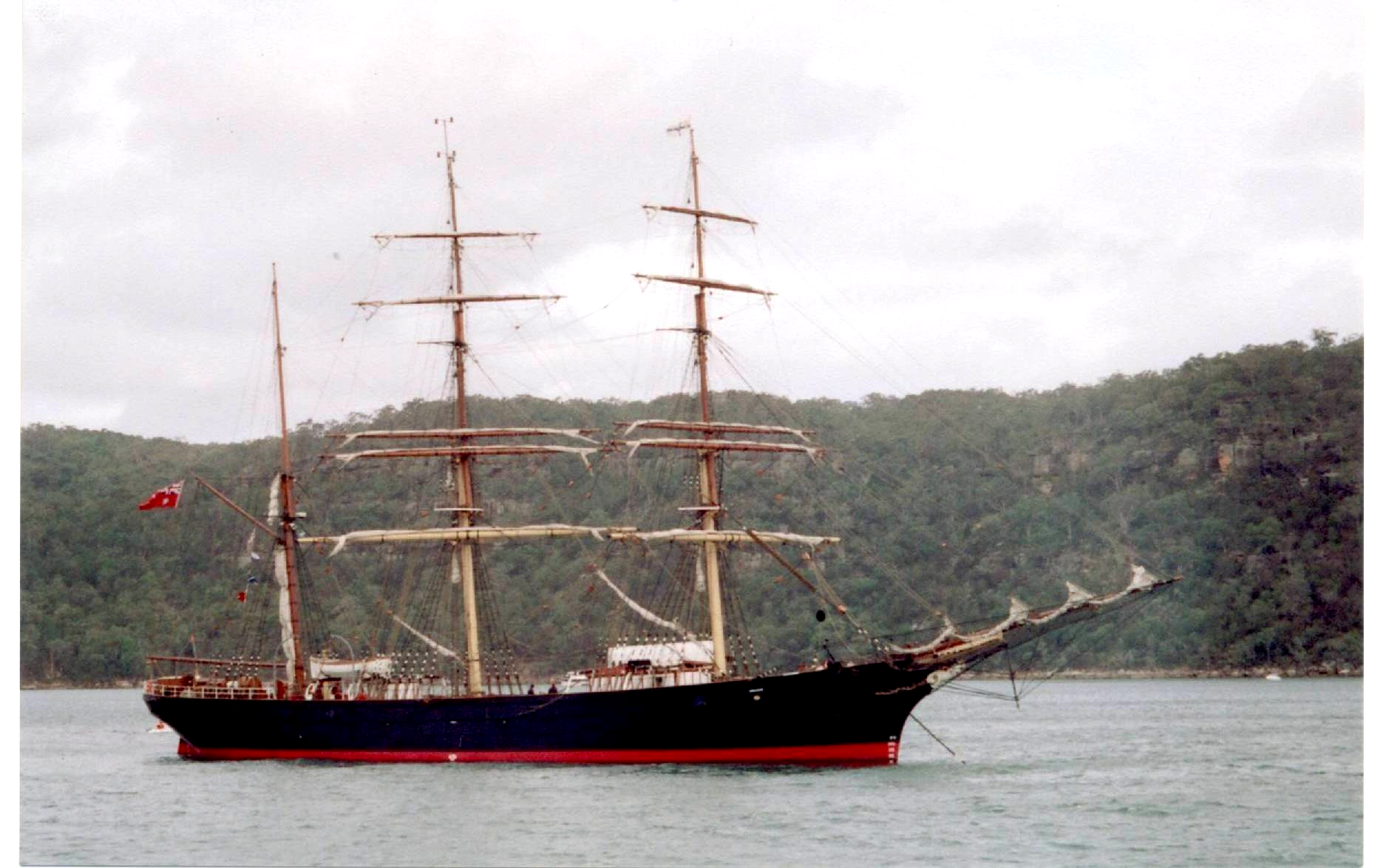
Refer to diagram “Anatomy of a sail and spars” illustrated by James Parbery,
More detail on running rigging for James Craig sails will be covered in Module 7.
Rig Conventions
Here are some of the internationally accepted conventions that govern the positioning of lines and their belaying pins.
- The higher the sail, the further aft its lines belay.
This provides the fairest lead for lines and avoids chafe, the sailing ship’s greatest enemy.
- Sheets for the square sails belay around the mast.
In accordance with convention 1, the lower topsail sheets will be on the forward side of the mast, followed by topgallant sheets and royal sheets being aftermost [1]. The reasoning is that a ship on its beam ends (knocked down) in a squall will need to let go sheets to reduce the pressure of wind on the sails. In such a situation, if the sheets were belayed to the main rails, the lee ones may be underwater.
- Clew garnets, clewlines, leechlines, buntlines and upper topsail downhauls (the “gear”) are belayed at the main rail amongst the shrouds.
Lines controlling the course are grouped together, next aft is the group of lines controlling the lower topsail, then the upper topsail and so on. Aloft, the further inboard the source of the line, the further aft in the group on deck it will be found. This is why the leechlines and buntlines belay aft of the clew garnets, clewlines and downhauls.
- Halyards belay at the main rail.
Convention 1 still applies. In addition, the square sail halyards belay on opposite sides when you compare fore and main masts. This is a custom that almost certainly comes from the days of fighting sailing ships with large crews. The same sails on each mast could be hoisted at the same time, by large numbers of crew running along the deck working space. The reasoning still holds good.
- The headsail halyards also alternate from port to starboard.
These halyards compete with the square sails for space at the main rail. The lowest headsail is the fore topmast staysail. The halyard belays at the starboard main rail just abaft of the fore royal lines. The inner jib is next, being on the port main rail, and so on.
- Main topgallant sheets belay at the main fife rail.
Although the main lower topsail sheets belay at the base of the mast to the spider band, the topgallant sheets belay at the main fife rail. This provides easier working access.
- Staysails and Jib downhauls belay close to the ship’s centre line
and so will be found on the anchor deck fife rail, fore mast spider band and the main mast fife rail. They belay on the same side as their sail’s halyard.
Despite these conventions, in nearly every ship you will find a few lines belayed in non conforming places. This may be because the lead is such that the line chafes in its conventional place, or the way the pin rails were constructed, is not strictly traditional.
Footnotes
| [1] | James Craig royal sheets belay at the main rail rather than at the base of each mast. This was due to the mainstay crowding the fore mast spider band, making it virtually impossible to belay the fore royal sheet. It was decided to belay this line at the main rail forward of the royal clewline. In order to preserve consistency, the main royal sheet was also* belayed at the main rail. |